Showing posts with label emerald. Show all posts

Monday, May 3, 2010

May Birthstones - Emerald, Agate & Sapphire

May Birthstones - Emerald, Agate & Sapphire


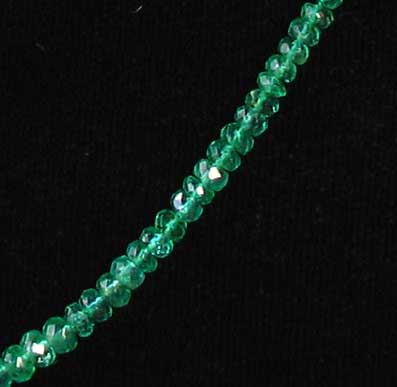
Both the Traditional and Modern birthstones for May is Emerald. Emerald is a member of the Beryl family and is 7.5 to 8 on the Mohs Hardness Scale. Emeralds in antiquity were mined by the Egyptians and in Austria. A rare type of emerald known as a trapiche emerald is occasionally found in the mines of Colombia. A trapiche emerald exhibits a "star" pattern; it has raylike spokes of dark carbon impurities that give the emerald a six-pointed radial pattern. Emeralds come from three main emerald mining areas in Colombia: Muzo, Coscuez, and Chivor.

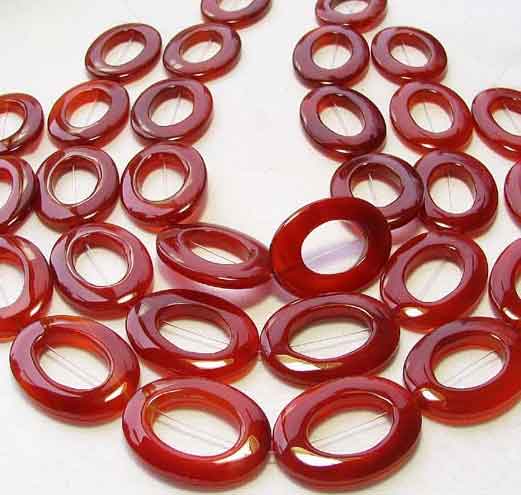
The Ayurvedic Birthstone for May is Agate. It is a microcrystalline variety of quartz (silica), chiefly chalcedony, characterised by its fineness of grain and brightness of color. Although agates may be found in various kinds of rock, they are classically associated with volcanic rocks but can be common in certain metamorphic rocks. Agate is a 7 on Mohs Hardness scale.

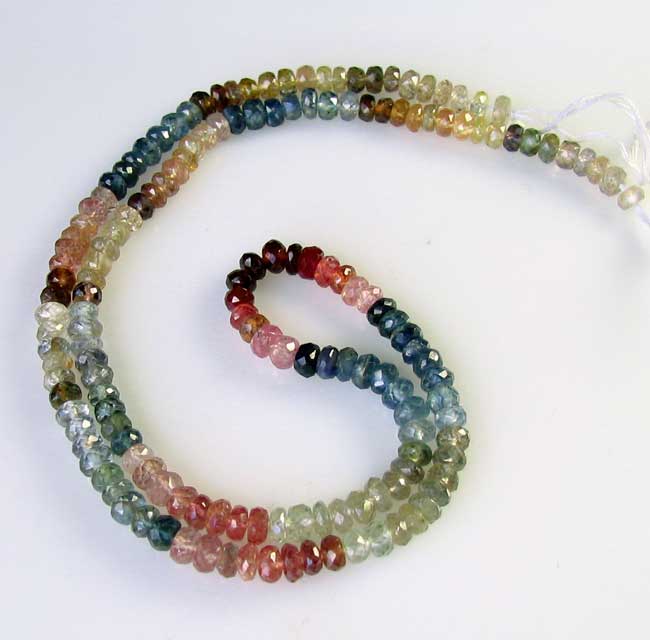
The Mystical Birthstone for May is Sapphire. Sapphire is a member of the Corundum family and is 9 on the Mohs Hardness Scale. Sapphire is one of the two gem varieties of corundum, the other being the red ruby. Although blue is the most well known hue, sapphire is any color of corundum except red. Sapphire may also be colorless, and it also occurs in shades of gray and black.

See more Emerald, Agate & Sapphire Beads here.

Monday, April 12, 2010

Creating a Toggle Pendant Necklace


How to create a toggle pendant necklace

Do you have a pendant bead that you love, but you don't know what to do with it? I love this limbcast agate disc pendant bead. The mossy inclusions are so intriguing! I felt that it needed more than just a simple pendant and decided to set it off using carnelian agate beads. I strung the carnelian agate beads simply on a 22K Vermeil clasp and wire-wrapped the pendant bead to the loop of the toggle clasp. This way I can wear it in front like a pendant or in back for an unexpected twist!

Emeralds, the modern birthstone for May, are a variety of the mineral beryl (Be3Al2(SiO3)6,) colored green by trace amounts of chromium and sometimes vanadium.Beryl has a hardness of 7.5-8 on the 10 point Mohs scale of mineral hardness.

Agate, the traditional birthstone for May, is a microcrystalline variety of quartz (silica), chiefly chalcedony, characterized by its fineness of grain and brightness of color. Although agates may be found in various kinds of rock, they are classically associated with volcanic rocks but can be common in certain metamorphic rocks.

35% off Emerald & Agate Beads

  • Enter the promo code: 35MayBirthst


  • Limited to stock on hand


  • Website items only, eBay items excluded


  • Sale begins April 12 and ends April 15, 2010
All images are linked to those items.

Monday, January 11, 2010

January Birthstones - Garnet & Emerald

January Birthstones - Garnet & Emerald


Garnet is the Traditional, Modern and Ayurvedic Birthstone for January. The name "garnet" may come from either the Middle English word gernet meaning 'dark red', or the Latin granatus ("grain"), possibly a reference to the Punica granatum ("pomegranate"), a plant with red seeds similar in shape, size, and color to some garnet crystals. Six common species of garnet are recognized by their chemical composition. They are pyrope, almandine, spessartine, grossular (varieties of which are hessonite or cinnamon-stone and tsavorite), uvarovite and andradite. Garnet has a Mohs scale hardness of 6.0 to 7.5 and can is found in many colors including red, orange, yellow, green, blue, purple, brown, black, pink and colorless.

Emerald is the Mystical Birthstone for January. Emeralds are a variety of the mineral beryl (Be3Al2(SiO3)6,) colored green by trace amounts of chromium and sometimes vanadium.[1] Beryl has a hardness of 7.5 - 8 on the 10 point Mohs scale of mineral hardness.[1] Most emeralds are highly included, so their toughness (resistance to breakage) is classified as generally poor. The word "emerald" comes from Latin smaragdus, via Greek smaragdos, its original source being a Semitic word izmargad or the Sanskrit word, marakata, meaning "emerald" or "green".

See more Garnets & Emeralds here.